|
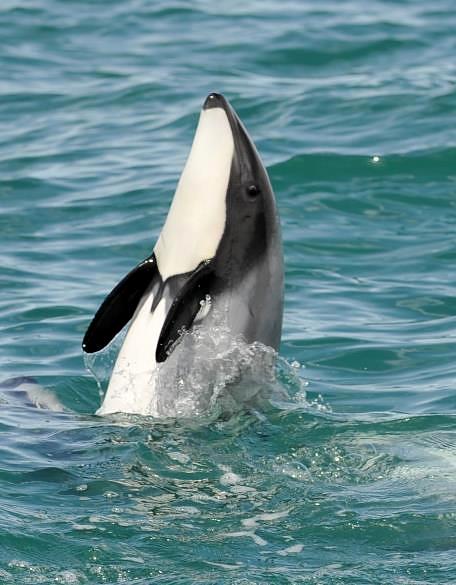
Social media campaigns ... Every so often something pops on your feed/tweetdeck/inbox asking for your support, and if it tweaks that nerve of conscience or empathy in you, then you dutifully re-post/re-tweet/forward. But does it really help? 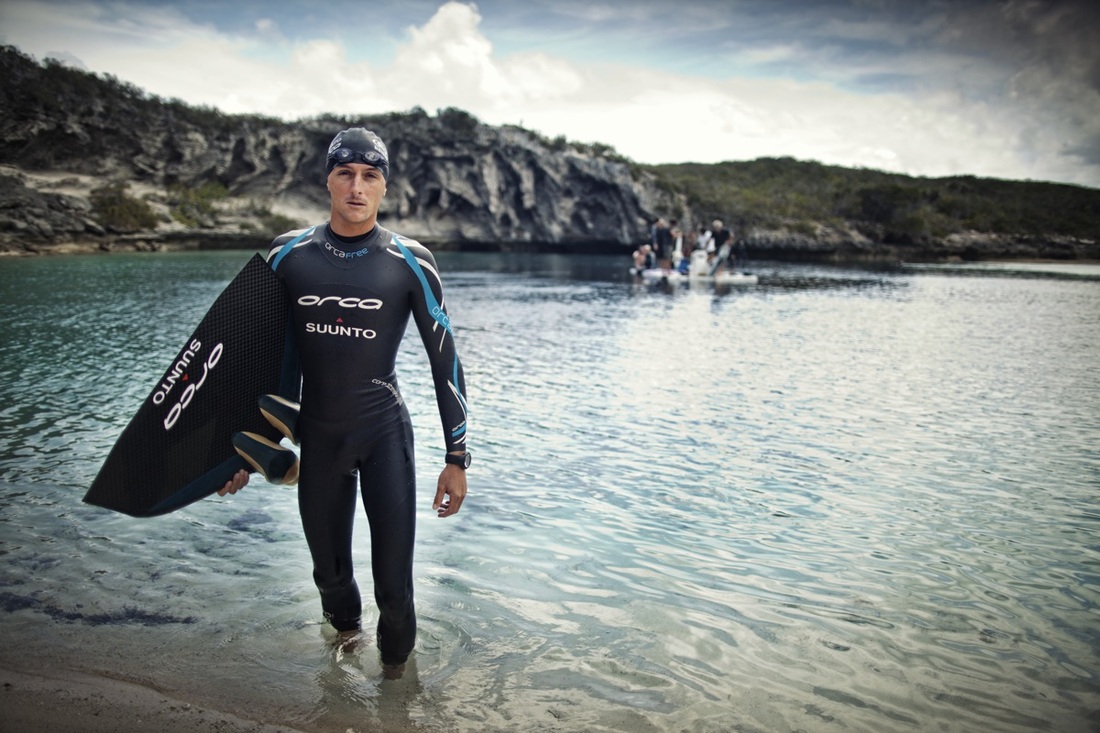 Photo: Augustin Munozo Social media are like plutonium. A little bit might have no effect, but if you add lots of little bits together until you get to critical mass then all of a sudden… well let's say you generate a lot of power! When social media reach this critical mass its power can change governments and cultures. In the case of Hector's and Maui's Dolphins, social media has helped a lot. Insiders say that NZ government has been "feeling the pressure" from the continuous exposure of their poor track record with the protection of these dolphin species. 49994 submissions and a total of 63500 signatures were received by NZ government during the effort at the end of last year. Social media raised the money to send NABU representative Barbara Maas to this year's meeting of the Scientific Committee of the International Whaling Commission (IWC) in S. Korea, where the information she presented prompted a strong recommendation urging New Zealand to protect all Maui’s dolphin habitat against harmful fishing methods immediately.. Mainstream media has stood up to take note as well, and a recent press release referencing the expert opinion on the dolphin's current status was printed in newspapers as far and wide as India, Ireland, the Philippines, France, the US, Australia and Kazakhstan. As Maui’s dolphins teeter on the brink of extinction, we are on the cusp of reaching critical mass. But we need to keep the pressure up and grow our community. It might just take one more push. Which is why we're organising a Tweetstorm to herald a boycott of New Zealand seafood on August 8th. Here's what happens: you do the click/like/tweet/forward-thing with the videos/pictures of Maui's Dolphins (#911MauisDolphins), and for the time being stop eating any NZ fish products: if you're at a restaurant you can ask the waiter where the fish comes from, at the supermarket it should be written on the packaging (of course this will affect businesses that do not fish in the dolphin's territory, which is regrettable, but this kind of commercial collateral is preferable to the by-catch of even a single one of the remaining 50 Maui's Dolphins). 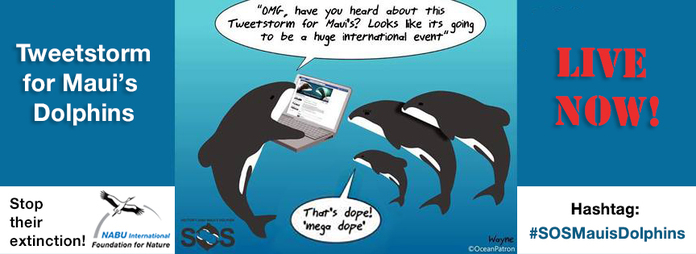 CLICK IMAGE for the Tweetstorm Facebook page Get tweeting now! Click this LINK and tweet away. It couldn't be easier. Remember to go through the list from the bottom up and make sure you don't retweet any of the messages from someone else. Otherwise they will not counted as part of the storm. People regularly ask me, "isn't it too late?" or "shouldn't the remaining dolphins be put in captivity to protect them?" My answer comes from the scientists who have done the decades of research and population modelling: no and no – because there is still sufficient genetic diversity and because all of these dolphins that have ever been held in captivity died. Besides without a safe habitat where would they go and they certainly don’t deserve to be relegated to living museum pieces. With protection across its full territory, the species can recover. Let's show the government and the fishing industry that this is the only adequate policy. 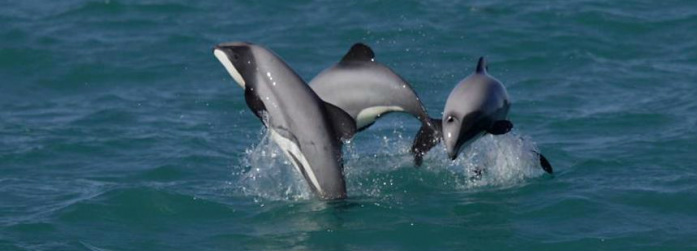 And this of course is what it's all about. Photo: Trevor Codlin
1 Comment
Around the world today there are many species threatened with extinction. Frogs, bats, sharks, parrots, tigers, owls, rhinos, and dolphins are struggling to survive on the fringes of a human world. It would be unfair to argue that any of these species is inherently more valuable than another. However being a New Zealander, and a freediver with a natural admiration of dolphins, I've been trying to make a difference for the Maui's and Hector's Dolphins, the world's smallest and most endangered dolphin species. To be honest, if you were to choose a species to try and save then this has to be the easiest pick, for a variety of reasons:
And yet, and yet … Despite all this, despite tens of thousands of petition signatures, individually written letters to the ministers and prime minister, despite the schoolchildrens' handwritten poems and carefully-coloured dolphin pictures, despite dozens of damning international press articles, all efforts and results for which I am sure the readers of this blog have played a large part… despite all this, Hector's and Maui's dolphins are no more protected than they were five months ago.
Why? New Zealand's government is contemptuously playing a waiting game. They are waiting for the outcry over a spate of net-scarred dolphin carcasses that washed up on the beaches last summer to die down. They are waiting for the furor over the latest Maui's population estimate - lower than anyone possibly feared - to subside. They are an entropic government, waiting for entropy to have its way. And meanwhile, while they waver and defer, while they shelve and consult, in the winter seas of New Zealand's west coast a population of now less than 55 animals, who represent the entirety of their species, swims every day in a territory that overlaps with the unscrupulous set nets and trawlers that have brought their number to the verge of annihilation. I know I'm not alone in saying that I will not wait or be content until they are protected and their numbers begin to increase. In the second half of this year, several documentaries and features including one with CBS's 60 Minutes, the most viewed and respected television journalism program worldwide, will air, telling parts of my story and showing the world the dark side of NZ's shameful treatment of these dolphins. By exposing the truth and threatening the multi-billion dollar business of tourism and fisheries, perhaps we can finally convince the NZ lawmakers into making the right decision. The campaign to save New Zealand's Hector's and Maui's Dolphins inevitably pits those who care about biodiversity and marine life against a fishing industry that is doing such an appalling job at protecting it. It can't be denied that some kind of character generalisations apply to the different trades that people wind up practicing. Nurses and kindergarten teachers are for the most part caring individuals, airline pilots are likely to be cool-headed and responsible, master chefs are often creative and inquisitive. Either they are shaped this way by their trade, or they are attracted to the job because they already have these qualities. 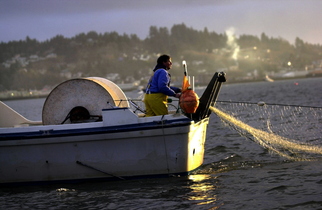 What then can be said about employees who every day toss away up to 90% of the life forms that they are responsible for killing? Their job is to remove the turtles, birds, unwanted fish, dolphins and more from the nets that have asphyxiated them, and discard their lifeless bodies back into the ocean. Is it likely that these are the sort of individuals who can be relied on to give honest testimony as to the number of endangered dolphins that are killed in their nets? Some people are obviously not cut out for this job, and several ex-fishermen have come forward to speak about the nightmare of their time on these boats. They tell tales of crews cutting dolphin's heads off or eviscerating them, in an attempt to make their bodies sink so they don't wash up on the beach and threaten their livelihoods. New Zealand activist Pete Bethune's twin brother Barry witnessed 5 Hector's Dolphins caught on the boat he was working on in a single day, and another 10 were caught in the same location that year. The captain later stated to media that he hadn't caught a single Hector's Dolphin in 20 years of fishing. Crew are told to keep quiet, since the dolphins are "stealing their fish and livelihood." This is like early European settlers arriving in America and complaining that the native Indians are 'stealing their buffalo' and thus deserve to be wiped out! Grasping at justifications, the fishing industry has tried to hijack the term extinction, claiming that their business will 'go extinct' if protection measures are put in place. Even if this were true (which it needn't be – there are many examples of fishing businesses in other countries adapting to sustainable methods after net bans) then is it even a factor that warrants consideration? Maree Kissick, evidently a fisherman's wife, posted a reply on my other blog which finished by saying "I am one of those people who will lose my home over your meddling affairs you know little about!" While a mortgage default would be unfortunate (if highly unlikely) businesses can be adapted, and homes can be downsized. Extinct species cannot be retrieved. Personally, if I knew that by giving up my house, all money and possessions I might save a species, then I would consider it my duty and do so without hesitation. I expect that anyone who shares a love of this planet and its denizens would feel a similar responsibility. Back in 2008, a Colmar Branton poll released by WWF showed that 83% of New Zealanders would prefer to have set net and trawl fishing banned completely rather than risk extinction of NZ's endemic dolphins. As the numbers of NZ's dolphins have dwindled, and the sentiments against unecological practices like net-fishing have grown, I expect that percentage has risen also. NZ's government has the choice to either represent their electors, as well as a basic ethical duty, or they can represent a handful of greedy businesses engaged in an out-dated and merciless mode of fishing. You can have your say by participating in our online opinion poll, which asks: Would you give up seafood from New Zealand to save Maui's and Hector's dolphins? Recently the situation with the latter species has become drastic, with only 55 individuals left, and this, coupled with the governments continued stonewalling and stalling of the issue has meant that the campaign has become more urgent. If those who are able to change the legislation to protect the dolphins don't have the moral common sense to do so then we must talk in their language, and show that the loss of a species (and what would be the first human-induced extinction of a marine dolphin) would be the bane of New Zealand's tourism industry and the international brand image it is founded on ("100% Pure", "Clean, Green NZ" etc). As a freediver I feel a close affinity to dolphins. It's clear from my own experiences, and from the way they are known to protect swimmers from sharks or interact with snorkelers and surfers, that these mammals reciprocate this kinship. Intrinsically it's impossible to argue that any one species is more valuable than another, and it's true that we anthropomorphize dolphins a lot and are fond of them in part for their unfailing smile and playful mirth. However they are also the most intelligent order of beings after man, and offer us not just another statistic of biodiversity, but also a chance to learn about ourselves through the ineluctable inspiration that is granted just by being in the presence of creatures in such perfect harmony with their world. To the maori they are known as tutumairekurai, which means 'special ocean dweller.' Should we lose such a rare example of the life's wonders for ever it would be a black mark on our name as stewards of this planet. 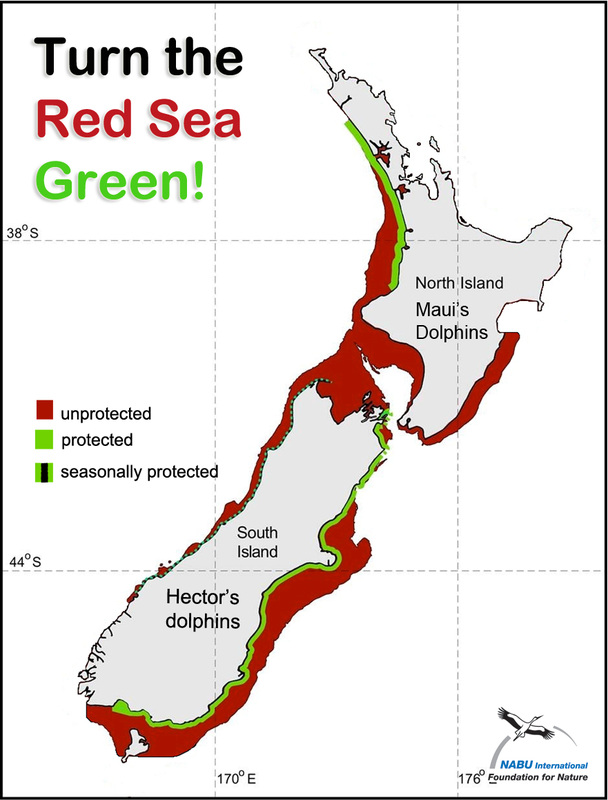 only a fraction of the dolphins' home (red) is protected (green) The first and only dolphin to become extinct so far due to human influence was a fresh water dolphin: the Yangtze River Dolphin. While they inhabited a tiny stretch of water in the most populated country of the planet (still no excuse for their extinction of course), the same can not be said for New Zealand's Dolphins. It is only through the rampant greed and malpractice of a government-pampered fishing industry that their species have been strangled to close to extinction. The imperative and only course of action is incontestable: trawling and gill-netting must be made illegal across the dolphins' entire territory. Benefit of doubt must be given to a crippled species, not to a belligerent fishing industry. I will not be content until this course of action has been implemented. It will give me further inspiration to dive deeper, to break more records, and with each press interview that follows use the publicity to further expose the moral vacuity of a government that promotes its country as "100% pure" while acting as an accomplice in the speciocide of Hector's and Maui's Dolphins.
|
William Trubridge 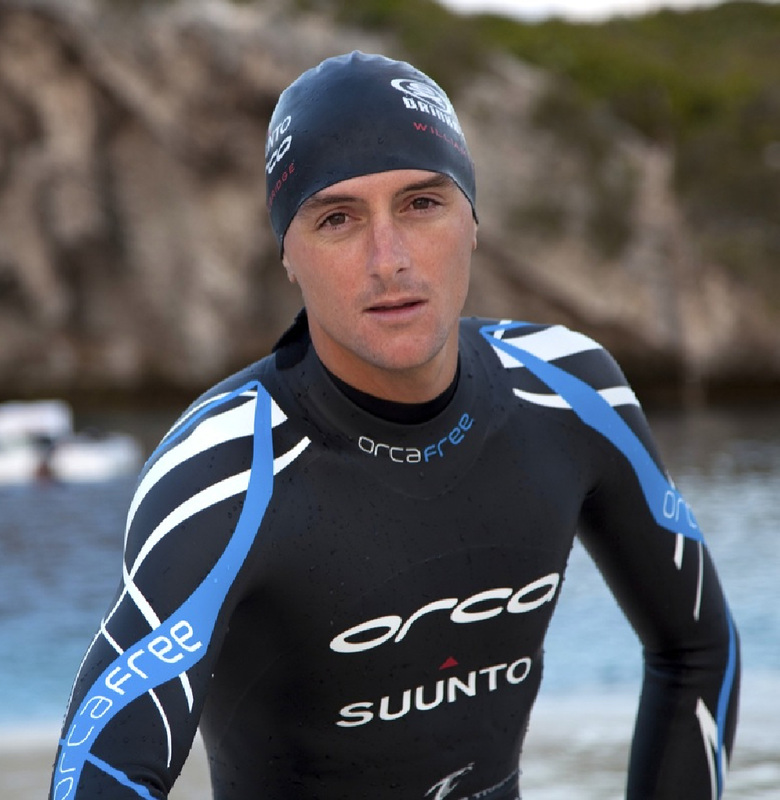
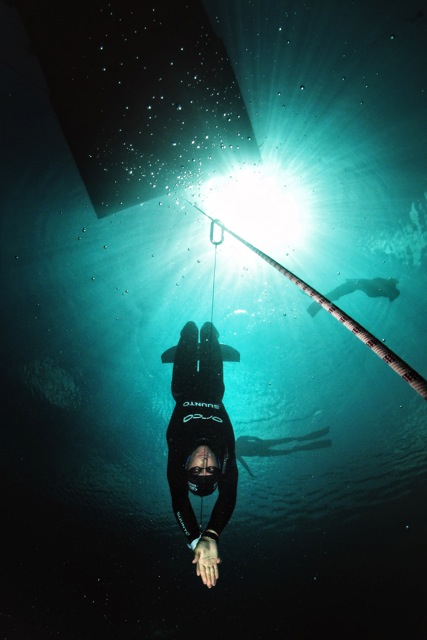
William Trubridge is a worldclass athlete with true depth. He has 15 freedive world records to his name and is not only the current freedive world champion but our dedicated Hector's and Maui's Dolphins Ambassador.
Watch William's amazing underwater dolphin appeal
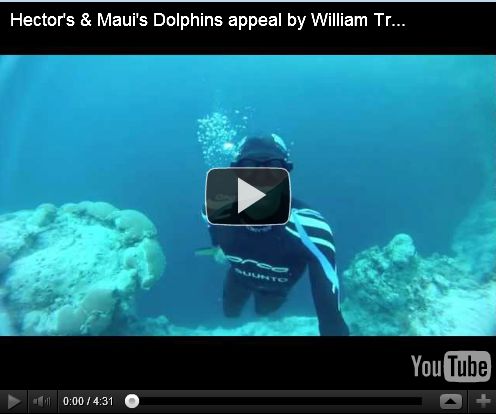
CLICK image to open
CLICK to download the flier
Watch William Breathe
Check out 9-time Emmy Award-winning ESPN producer Martin Khodabakhshian's fascinating freedive documentary 'Breathe'. The film follows William as he attempts to break his own world record by diving completely unaided to a depth of 300ft. 
CLICK image to open
Archives
August 2013
|
Hector's and Maui's Dolphin SOS
 RSS Feed
